
IN-PERSON IN STUDIO CITY & ONLINE across CALIFORNIAWhen worry has started running the household, or the workday.
Evidence-based anxiety treatment for kids, teens, and adults, with a clinician trained in CBT, Exposure and Response Prevention (ERP), and SPACE.

CCTAP-certified anxiety treatment professional
SPACE-trained (Yale Child Study Center)
CBT, ERP, ACT,
mindfulness-based CBT

Studio City + telehealth
across California
Anxiety isn’t always loud.
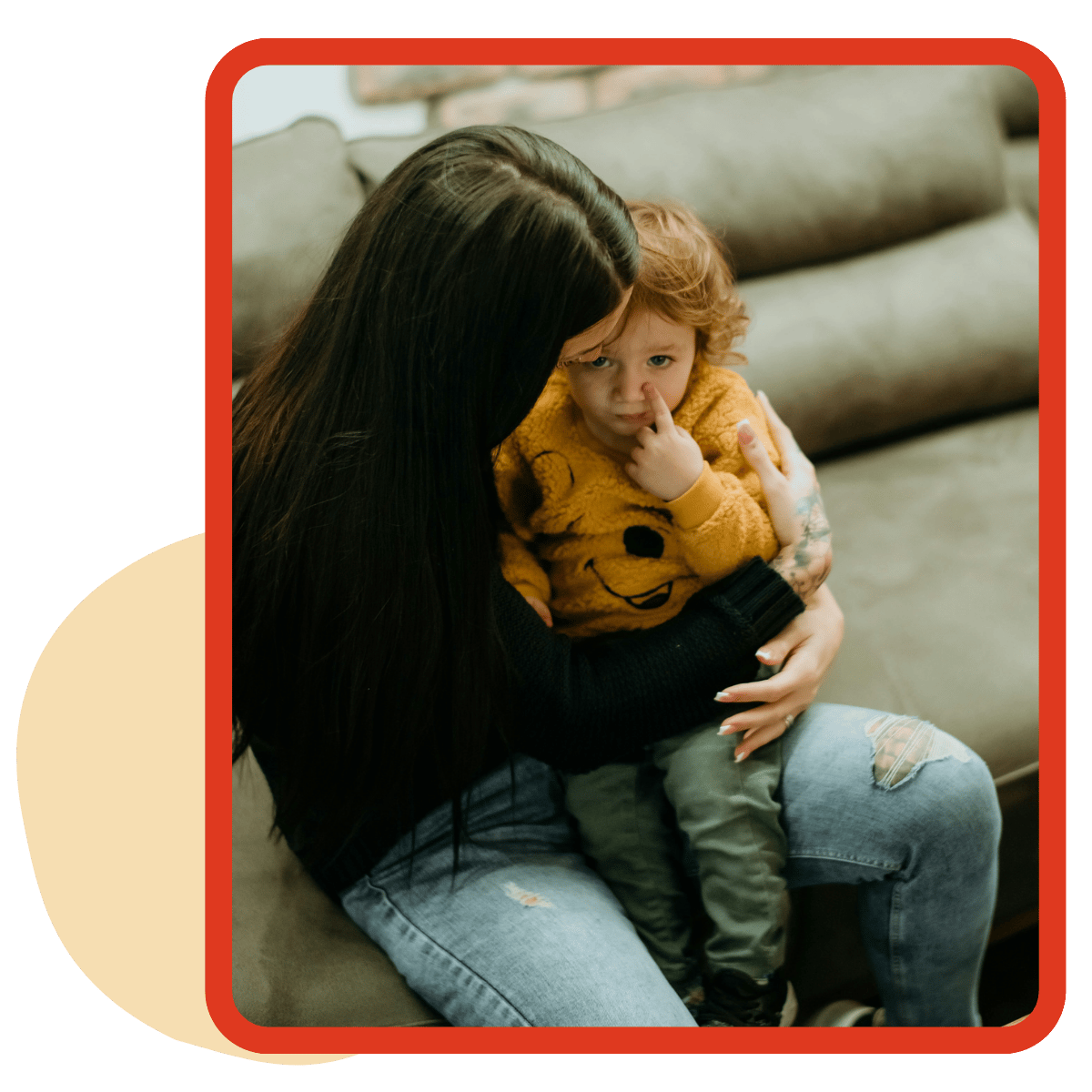
Some kids freeze. Some can't leave a parent's side. Some won't go to birthday parties. Some can't fall asleep. Some have stomachaches before every test. Some seem fine all day at school and then unravel the second they walk in the door.
Adults show up differently, but the pattern is familiar: a promotion that triggers a spiral of what-ifs, a job search that stalls before the first application goes out, health anxiety that turns every doctor's appointment into a research project, a Sunday night that feels worse than it should.
Anxiety presents differently at every age, and the goal of treatment isn't to make it disappear. It's to teach the person, and often the family, how to keep it from running the show.

I commonly treat:
Generalized anxiety (worry about many things, hard to control)
Separation anxiety (intense distress when away from caregivers)
Social anxiety (fear of judgment in social settings)
School-related anxiety, including school refusal
Performance, test, and workplace anxiety
Career-related anxiety and decision paralysis
Mild OCD and specific phobias (treated with ERP)
Health anxiety and somatic symptoms

How treatment actually works
-

Cognitive Behavioral Therapy (CBT)
CBT helps clients recognize the loop between situations, thoughts, and behaviors, and learn to interrupt it. For younger kids, this is taught through play and metaphor. For teens and young adults, it's more direct. For working adults, the same loop often shows up as a spiral that starts with one email and ends with an evening lost to rumination, and CBT gives a concrete way to catch it earlier each time.
-

Exposure and Response Prevention (ERP)
ERP works by gradually approaching the feared thing while practicing not doing the avoidance behavior. It's harder than it sounds. For a teenager that might mean sitting with a specific fear instead of checking on it. For an adult, it might mean sending the email without rereading it eight times first. It also works in a way no other modality does for these conditions.
-

SPACE: Supportive Parenting for Anxious Childhood Emotions
A parent-based treatment developed at Yale's Child Study Center. Instead of asking the child to manage their anxiety alone, SPACE teaches parents how to respond differently to anxious behavior, particularly the accommodations parents naturally provide that, over time, reinforce the anxiety. SPACE has strong outcomes for kids who haven't responded to traditional individual therapy.
-

Mindfulness and somatic strategies
Anxiety lives in the body before it lives in language. Progressive muscle relaxation, breathing techniques, and grounding practices give kids, teens, and adults tools they can use in the moment, whether that moment is a meltdown at drop-off or three minutes in a parking lot before a job interview.
What treatment looks like start to finish
-

Free 20-minute consultation
We talk through what you’re seeing. I tell you whether anxiety treatment is the right starting point or whether something else (an evaluation, a different specialist, a school-based intervention) should come first.
-

Intake assessment
A longer first session to understand the type of anxiety, the family context, and what’s been tried already. We rule out other things that look like anxiety (ADHD, autism, sleep issues, learning differences).
-

Treatment plan
Most clients do weekly sessions. Some are individual; some are parent-only (SPACE). Some are mixed. Sessions are typically 50 minutes; SPACE is sometimes structured as parent-only sessions every other week.
-
Progress reviews
Every 6–8 weeks, we review what’s working and what isn’t, and adjust. Most families see meaningful change within 12–16 sessions for moderate anxiety, longer for OCD or severe symptoms.
Answers to Your Questions
-
Yes. Adult anxiety treatment usually centers on CBT and ERP, and often connects to something specific: a career change, a job search that's stalled, or health anxiety that's taken over. The approach is the same evidence-based foundation, adjusted for what's actually on your plate.
-
Three is generally the youngest. Below that, the work is almost entirely with parents (which is what SPACE is). Between 3 and 6, most sessions are play-based. Older kids and teens move into more direct talk therapy.
-
Eventually, yes, that’s how exposure work happens. But not on day one, not on your child’s timeline rather than mine, and not without the coping tools to handle it. Therapy is paced.
-
For kids under 12, almost always yes. For teens, it depends on the teen but parent involvement is usually at least 20% of the work. For SPACE specifically, the parent IS the work; the child may never come to a session.
-
CBT is the broader category, recognizing thought patterns and changing behavior in response. ERP is a specific protocol within CBT designed for OCD and phobias. ERP gradually exposes the client to the feared thing while preventing the compulsive avoidance behavior. Most kids with general anxiety benefit from CBT; kids with OCD or specific phobias benefit specifically from ERP.
-
SPACE is a structured, manualized treatment with a specific theoretical model, that family accommodations to a child’s anxiety, while well-intentioned, can maintain the anxiety. SPACE walks parents through reducing those accommodations supportively. It’s evidence-based and was developed specifically for childhood anxiety and OCD.
-
For moderate anxiety, families usually report meaningful changes within 8–12 weeks of consistent treatment. For OCD, longer, typically 12–20 weeks. For separation anxiety in young children, sometimes faster, especially with SPACE. None of these are guarantees; some kids respond quickly and some need longer.
-
I’m out-of-network. I provide a Superbill after each session you can submit to your insurance. PPO plans typically reimburse out-of-network mental health at 50–80%; HMO plans rarely reimburse out-of-network. Your insurance member services line can confirm.
Worried about your child’s anxiety?
Free 20-minute consultation. We’ll figure out the right next step for your family, whether that’s working with me, working with someone else, or starting somewhere different entirely.